Last updated
How fast can you set up sanitation after a disaster?
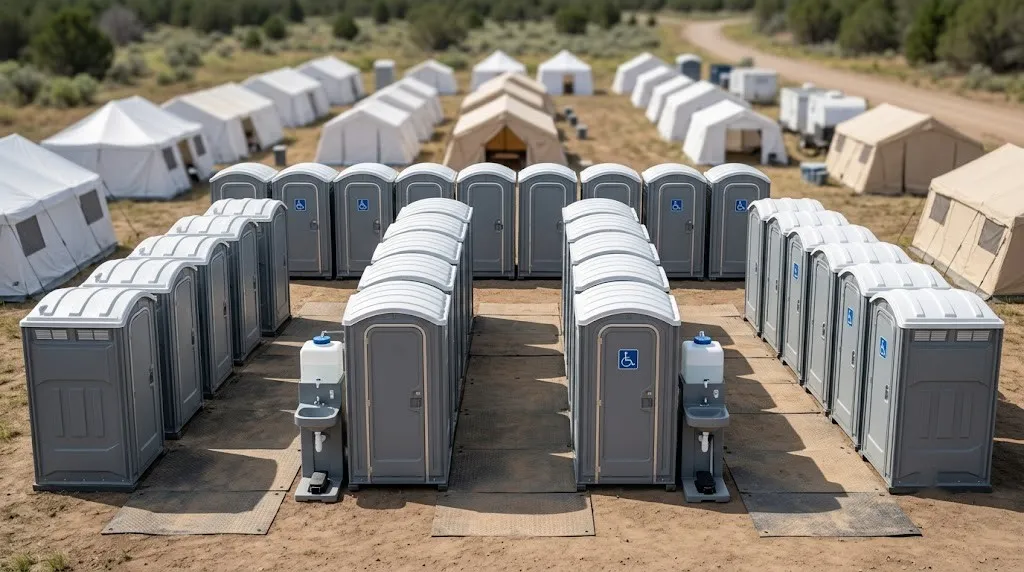
Speed matters most in the first 48 hours, when city water or septic systems are down and people still need a working bathroom. Racine Porta Pros treats storm response like emergency porta potty rental: units get staged and delivered as soon as roads clear, no waiting on a standard weekly schedule. A standard unit holds 60 to 70 gallons and stands about 92 inches tall, which is enough capacity to skip daily service during the first stretch of a crisis. If flooding cuts off septic access, a holding tank rental can bridge the gap for a household or job trailer until the system is repaired. For neighborhoods without a well or municipal line, we pair toilets with a handwashing station rental, since running water is often the first thing to disappear and the last thing restored. Shelters set up in gyms or community buildings sometimes need more than toilets. A restroom trailer rental gives displaced families a private, heated option when portable units alone will not cut it, and a shower trailer rental matters when people are staying on site for more than a night or two. Mount Pleasant sits 4.9 miles west of Racine and Caledonia is 7.7 miles northwest, both close enough that Racine Porta Pros can run trucks between staging points without losing hours to distance.
What do shelters and relief sites actually need?
Every relief site needs toilets, handwashing and a way to keep both running without daily oversight from overwhelmed staff. OSHA 1926.51(c) sets the baseline ratio, one toilet for 20 workers or fewer, which is a reasonable starting point for volunteer and relief crews even outside a construction context. If cleanup work involves disinfectants, mold treatments or other chemical agents, OSHA 1926.51(f)(1) requires washing facilities for anyone applying paints, coatings, herbicides or insecticides, and that rule covers plenty of the sanitizing work that follows flood damage. Soap and towels are not optional at a relief site; 29 CFR 1910.141(d)(2) requires them, and hand sanitizer does not meet that standard. For sites serving displaced residents rather than workers, ADA Standards section 213.2 says at least 5 percent of clustered units need to be accessible, never fewer than one, so an ADA accessible porta potty belongs in the mix from day one, not added later. Larger shelters, including anything run out of a fairground or gymnasium near Racine, often need a bigger cluster than a handful of standard units. A 4 stall restroom trailer or 8 stall restroom trailer handles higher foot traffic better than scattered singles, and it keeps lines shorter when people are already stressed. Debris cleanup crews working alongside the shelter often need a roll-off dumpster rental too, since storm debris piles up fast and blocks access if it is not hauled off.
Where should units go during a flood or emergency?
Placement decisions during a disaster follow the same physical rules as any other job, just under worse conditions. Units need stable, firm, slip-resistant ground under ADA Standards section 302.1, which is harder to find when the surrounding lot is saturated or covered in debris. A roll-off truck needs about 60 feet of straight clearance behind it to place a dumpster, so relief coordinators should keep an access lane open even when parking is tight around a shelter. Keep at least a 36 inch clear path under ADA Standards section 403.5.1, and make sure any door opening on an accessible unit meets the 32 inch minimum in ADA Standards section 404.2.3. Both matter more, not less, when the people using the site include seniors, families with strollers, or anyone with limited mobility. If flooding has cut off part of a neighborhood, staging additional units in Kenosha, 11.7 miles south of Racine, or in Oak Creek, 14.6 miles north, lets Racine Porta Pros keep supply close without crowding a single access road. Temporary fencing around a staging area also helps control foot traffic and protects equipment overnight; see temporary fence rental for that piece. For general placement questions outside a disaster scenario, the porta potty placement guide covers the same ground rules in more detail.
How much does emergency sanitation cost during a disaster?
Pricing follows standard rental bands even in a crisis; a standard unit typically runs $100 to $350 a day depending on delivery timing and demand. Weekend and rush delivery fees may apply when trucks are rerouted on short notice. Check porta potty rental cost for full detail before requesting a quote.
Can you deliver to a shelter with no working water or power?
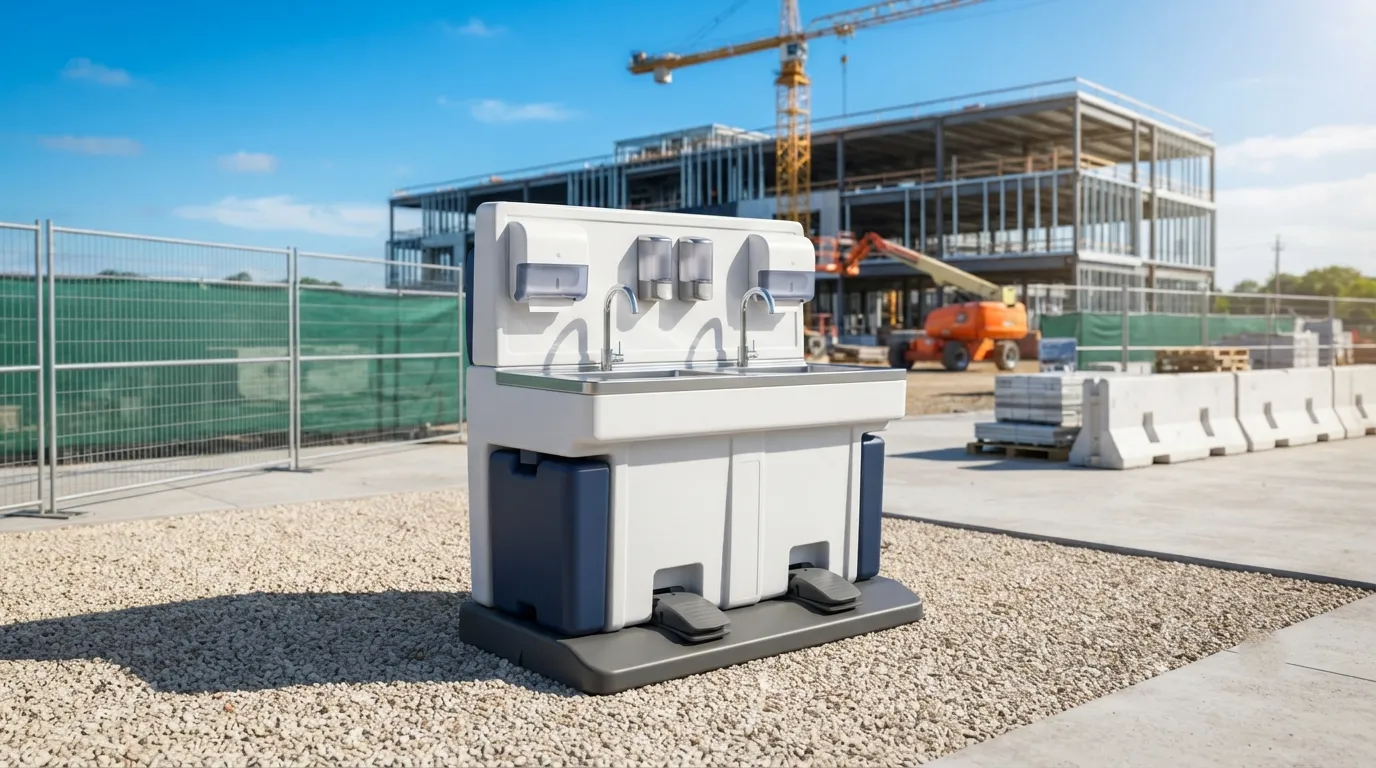
Yes. Standard units and handwashing stations do not need a water hookup to function, and a portable sink rental carries its own tank. OSHA 1926.51(a)(1) still requires potable water on site, so we fill stations before delivery.
Do you provide sanitation for whole neighborhoods, not just one site?
Yes, Racine Porta Pros scales from a single household to a multi-block relief zone. Larger deployments often combine portable restroom rental with dumpsters and fencing. Call ahead so we can route trucks efficiently across Racine.
What happens if roads are blocked and delivery is delayed?
We reroute through the nearest open access point and prioritize shelters and medical sites first. Distances like the 7.7 miles to Caledonia give us flexible staging options when the direct route into Racine is closed.
Should we request ADA units even for a temporary shelter?
Yes. ADA Standards section 213.2 requires accessible units in any cluster, and disaster conditions do not waive that. See ADA restroom requirements for the full standard before your event or shelter opens.
Next step
Get a delivery date
Tell us the address, the dates and the headcount. We size the order and confirm the route.